

Hamstring Injuries and Rehabilitation.

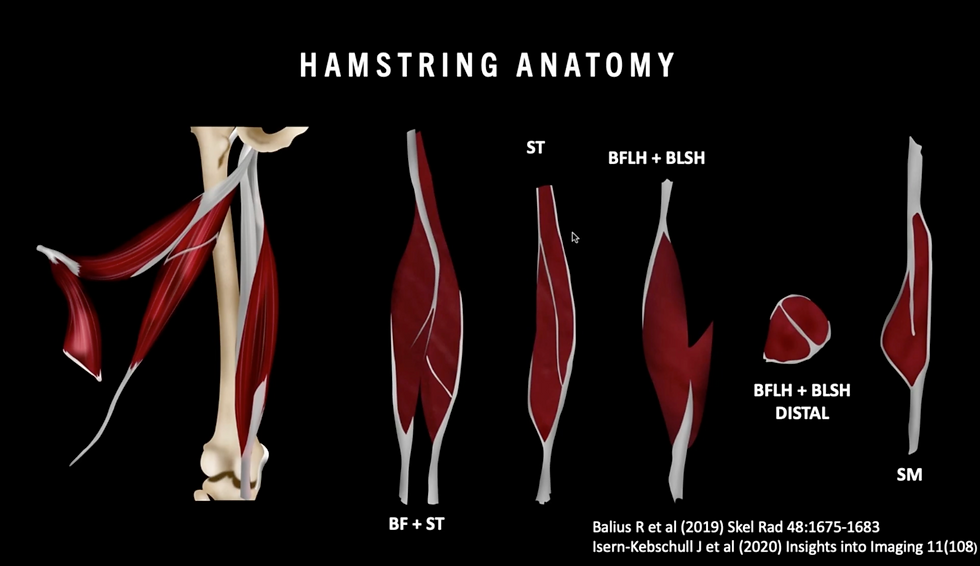
The hamstrings are a group of three muscles at the back of your thigh that cross both the hip and knee joints playing an important role in walking, running and everyday movements. Hamstring injuries can happen at any stage of life and may occur during activities such as sprinting, walking, bending, climbing stairs or after a trip/fall.
They can occur suddenly during a high-speed movement such as sprinting, kicking or accelerating when the hamstrings are required to produce high levels of force while lengthening. They can also happen during sudden unexpected movements such as slipping or trying to regain balance quickly or they may develop gradually following a change in activity levels or increased load.
Common injuries include:
The most common hamstring injury is a muscle strain. They can occur within the muscle or where the muscle joins the tendon, with injuries ranging from a mild strain to a complete tear. Symptoms can include sudden sharp pain at the back of the thigh, tenderness, bruising and reduced strength with difficulty walking.
Proximal hamstring tendinopathy affects the hamstring tendon where it attaches to the sitting bone (ischial tuberosity). These injuries develop gradually over time due to repeated loading. Symptoms include pain with prolonged sitting, running, bending or activities with repeated acceleration.
It is important to seek a physiotherapy assessment if you experience significant pain, bruising, weakness or difficulty walking, particularly following a fall or traumatic injury.
Rehabilitation
Recovery from hamstring injuries will vary depending on the type of injury and severity. Recovery is criteria based and guided by symptoms, strength and function rather than time alone. Rehabilitation will also differ depending on whether your goal is returning to everyday activities, recreational exercise or field sports such as rugby or AFL.
Most hamstring injuries respond well to a structured rehabilitation program which will initially focus on managing symptoms and restoring comfortable walking. Strengthening will commence as early as symptoms allow targeting not only the hamstring but also the surrounding muscles that support hip and lower limb function.
Mid to late-stage rehabilitation involves progressively increasing hamstring strength and capacity before transition to exercises that are specific to your recreation or sporting demands. Our goal at the end of rehabilitation is to restore strength, movement and your confidence so you can safely return to everyday activities, exercise and sport.
It is important to note that hamstring injuries have a relatively high recurrence rate, especially if initial rehabilitation is rushed or full strength and function are not restored.
If you are experiencing hamstring pain or recovering from a hamstring injury, our physiotherapists can help assess your injury and guide you through an individualised rehabilitation program to help you return to the activities you enjoy.
By Ella Waite
Comments